
Choosing the best Gas Grill for a business is a practical decision, not a showroom contest. A busy restaurant needs steady heat, fast recovery, safe controls, and enough cooking space for its busiest hour. A food truck may value compact design and low fuel consumption more. Capacity matters, but oversized equipment can waste fuel and valuable kitchen space.
Grilling educator Jamie Purviance offers a useful principle: “The best grill is the one that fits your needs.” That idea deserves careful attention. A reliable Gas Grill should match the menu, daily volume, staff skills, ventilation system, and cleaning routine. Look for durable stainless steel, evenly distributed burners, accessible grease management, and controls that workers can understand quickly. Small details matter. A cool-touch handle can prevent injuries. Removable grates can shorten closing duties.
Cost also requires a wider view. A cheaper unit may demand frequent repairs or unevenly cook expensive ingredients. That mistake can quietly damage service quality. Still, the most expensive grill is not automatically the best choice. Business owners should compare warranty coverage, replacement parts, energy use, installation needs, and local service support. Ask for performance evidence, not attractive promises.
This guide examines those factors with a commercial perspective. It also recognizes an uncomfortable truth: no grill suits every operation. The right choice may seem less impressive, yet perform better during a crowded dinner service. Experience, testing, and honest cost calculations should guide the final decision.
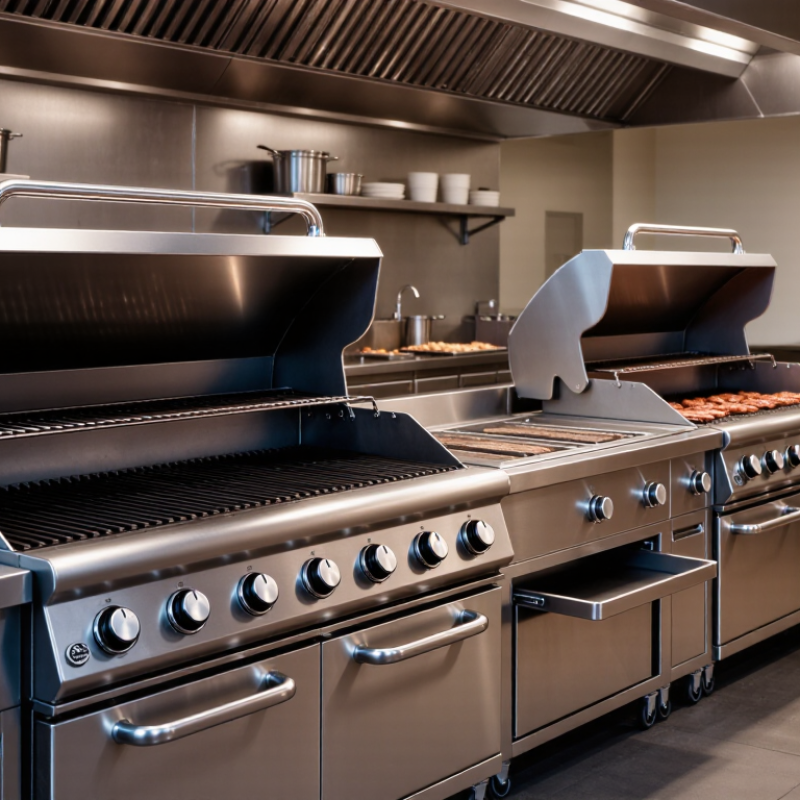
Choosing the best gas grill begins with defining how your business actually cooks. A busy breakfast café needs fast heat recovery, while a small catering team may value portability and simple controls. List your busiest service period, daily portions, and cooking methods. Grilling steaks, roasting vegetables, and searing seafood require different temperature zones. Measure the available space, including clearance around the grill and room for cleaning access. A grill that fits tightly may slow staff movement and create avoidable safety problems.
Operating conditions matter just as much. An outdoor station faces wind, rain, dust, and changing temperatures. An indoor kitchen needs suitable ventilation, safe gas connections, and professional installation. Check local commercial requirements before purchasing. Look beyond advertised heat output. Burner control, preheating time, grate durability, grease management, and recovery after opening the lid often affect service more. Stainless surfaces can simplify cleaning, but they still require daily degreasing and inspection. Small details become expensive during a crowded dinner shift.
Test the grill with your real menu, not only with an empty grate. Record heating time, fuel use, temperature consistency, and cleaning effort. I once underestimated wind exposure and overestimated a grill’s capacity. That mistake caused uneven cooking during peak service. My early checklist also ignored staff training time. Review those weaknesses honestly. Ask cooks to operate the controls wearing heat-resistant gloves and following the planned workflow. Their feedback may reveal awkward handles, poor visibility, or slow grease removal before the equipment becomes a costly fixture.
Choosing the best gas grill starts with your menu, not its appearance. Open grates create strong searing and smoky contact marks. Radiant grills deliver steadier heat for burgers, seafood, and vegetables. Charbroilers suit high-volume cooking, but they can lose heat when staff open the lid repeatedly. Infrared sections cook quickly, though their narrow heat zones require careful training.
Size should match peak demand, not an average Tuesday. Measure cooking surface, ventilation clearance, and service access. A small kitchen may need two compact units instead of one oversized grill. Fuel choice matters too. Natural gas usually supports fixed installations and stable operating costs. Propane offers flexible placement, but cylinder changes interrupt workflow. The U.S. Energy Information Administration tracks regional gas prices, so compare local tariffs before calculating payback. Cooking performance should be tested with a full load. Check recovery time, edge-to-center temperature differences, grease control, and cleaning time.
Tips: Record three busy service periods before buying. Ask suppliers for heat-recovery data under realistic loads. ENERGY STAR reports that restaurants can use five to seven times more energy per square foot than other commercial buildings. That makes burner efficiency and idle controls financially important. The National Restaurant Association’s 2024 industry report projected U.S. restaurant sales above one trillion dollars, while operators still faced high labor and food costs. A few saved minutes matter. I would not trust a showroom demonstration alone. Test the grill with your own patty thickness, pan sizes, and staffing pattern. Mistakes happen, especially during rushes. A grill that performs perfectly empty may disappoint when crowded.
Choosing a gas grill for business begins with materials, not appearance. Commercial-grade stainless steel resists moisture, grease, and frequent cleaning, but quality varies. Check welds, burner shields, hinges, and caster locks by hand. Thin panels may look polished, then warp near intense heat. I have seen attractive grills fail because their drip trays were too shallow.
Durability also depends on service access. Removable grates and tool-free burner access reduce downtime. The FDA Food Code 2022 requires hot food to remain at 135°F or above and cold food at 41°F or below. A reliable grill should support stable cooking temperatures, not merely reach a high maximum. Test several zones with a calibrated thermometer. Uneven heat wastes food and staff time.
Safety features deserve practical inspection. Look for flame-failure protection, protected ignition controls, heat-resistant handles, and clearly visible gas connections. NFPA 96 emphasizes grease removal, clearance, and ventilation for commercial cooking operations. These details are not optional decoration. They reduce fire exposure. The CDC estimates that contaminated food causes about 48 million illnesses annually in the United States, so cleanability matters. Choose smooth surfaces, removable grease components, and drainage that does not trap residue. Maintenance schedules are easy to write and easy to ignore. That is the weak point. Ask who will clean the grill after a crowded Friday service, then choose equipment that person can realistically maintain.
Use this 1–5 evaluation matrix to compare common commercial grill material profiles. Higher scores indicate better expected performance for the selected criterion; maintenance measures ease of routine cleaning and servicing.
Selection priorities should reflect your operating environment: corrosion resistance is especially important in humid or coastal locations, while durability and maintenance efficiency affect long-term operating costs.
Choosing a gas grill for business starts with operating numbers, not shiny surfaces. Measure daily cooking hours, gas consumption, menu volume, and ventilation needs. A low purchase price can hide expensive fuel use. Ask suppliers for tested energy data under realistic cooking conditions. My first estimate was too optimistic. Peak-hour demand used more gas than expected.
Compliance standards deserve careful checking before installation. Confirm required safety certifications, gas connections, ventilation rules, and cleaning access with qualified local professionals. Keep inspection documents and maintenance records in one place. Small gaps can delay opening or create avoidable safety concerns. Do not rely only on a sales brochure.
Warranty terms should cover burners, valves, grates, and labor separately. Check exclusions, response times, and approved repair procedures. A short warranty may signal higher long-term risk. Supplier support matters during busy service. Look for stocked replacement parts, clear training, remote troubleshooting, and technicians who understand commercial kitchens. Ask who answers after closing time. Get every promise in writing. A supplier may sound responsive before purchase, yet support can weaken later. Test the service process with practical questions before signing. Balancing energy cost, compliance, warranty strength, and support takes more time, but it reveals the grill’s true business value.
Choosing a gas grill for a business starts with a realistic service test, not a glossy specification sheet. In a busy kitchen, measure heat recovery after opening the lid repeatedly. Place identical food portions across the grate and record cooking time, browning, and temperature variation. A strong grill should recover quickly without scorching the center. Test the controls with greasy gloves. Small details matter. Ask a qualified technician to verify gas connections, ventilation needs, and local installation requirements before purchase.
Budgeting must include more than the purchase price. Calculate fuel use, cleaning labor, replacement parts, servicing, and expected downtime over several years. A cheaper unit may become expensive when burners clog or grates warp during peak service. Request written specifications and warranty terms, then compare them with your projected daily workload. For a high-volume operation, durable components and removable grease trays may justify a higher initial cost. Still, I would not pay for features staff will rarely use. That mistake is easy to make.
Long-term planning should match your menu, kitchen layout, and growth forecast. Leave enough clearance for cleaning and safe movement around the grill. If the menu may expand, choose flexible cooking zones rather than maximum size alone. Keep maintenance logs from the first week, including ignition problems, uneven flames, and cleaning time. These records reveal operating costs more honestly than sales brochures. My own evaluations have sometimes favored a powerful grill, only to find its capacity unnecessary during slower periods. Recheck the decision after a trial shift.
Practical comparison framework for restaurants, catering operations, food trucks, and outdoor commercial kitchens
| Evaluation Dimension | Compact Countertop Unit | Standard Freestanding Unit | High-Capacity Commercial Unit | Recommended Assessment |
|---|---|---|---|---|
| Typical cooking area | 400–600 sq in | 600–900 sq in | 900–1,400 sq in | Match the usable cooking surface to peak orders, not average daily demand. |
| Number of burners | 2–3 | 3–5 | 5–8 | More independent burners allow better temperature zoning and menu flexibility. |
| Approximate heat output | 20,000– thirty-five thousand BTU/h | 35,000–60,000 BTU/h | 60,000–100,000 BTU/h | Verify heat recovery after the lid is opened and food is added; maximum BTU alone is not enough. |
| Expected output capacity | 20–35 servings per hour | 35–70 servings per hour | 70–120 servings per hour | Run a timed test using the same portion size, cooking temperature, and staff procedure. |
| Temperature range | 250–600°F | 250–650°F | 200–700°F | Test both low-temperature holding and high-temperature searing performance. |
| Temperature uniformity target | Within ±40°F across the grate | Within ±35°F across the grate | Within ±30°F across the grate | Measure several grate zones with a calibrated surface thermometer. |
| Fuel requirement | Natural gas or propane | Natural gas or propane | Usually natural gas; propane may require larger supply capacity | Confirm local fuel availability, connection size, ventilation, and installation regulations. |
| Initial equipment budget | $800–$2,000 | $2,000–$5,000 | $5,000–$12,000 | Treat these as planning ranges; installation, freight, accessories, and local taxes may be additional. |
| Installation and site cost | $200–$1,000 | $500–$2,000 | $1,500–$6,000+ | Obtain a site-specific quote before selecting the equipment configuration. |
| Estimated daily fuel cost* | $4–$10 | $8–$18 | $15–$35 | Calculate using local fuel prices, operating hours, actual burner duty cycle, and seasonal demand. |
| Daily cleaning time | 15–25 minutes | 20–35 minutes | 30–50 minutes | Include labor time for grates, grease trays, burners, exterior surfaces, and safety checks. |
| Expected service life | 5–8 years | 7–12 years | 10–15 years | Actual life depends on material quality, cleaning, operating hours, and replacement-part access. |
| Maintenance reserve | 3–5% of purchase cost per year | 4–7% of purchase cost per year | 5–10% of purchase cost per year | Budget for burner tubes, igniters, grates, valves, grease components, labor, and inspections. |
| Best fit by operation | Low-volume service, kiosks, limited menus | Small restaurants, cafés, catering teams | High-volume restaurants, banquet service, central kitchens | Select the smallest unit that meets peak demand with an appropriate capacity buffer. |
| Decision score weighting | Capacity 25%; consistency 25%; cost 25%; cleaning 25% | Capacity 30%; consistency 25%; cost 20%; durability 25% | Capacity 35%; consistency 25%; durability 25%; operating cost 15% | Adjust the weighting to reflect your menu, labor costs, operating schedule, and growth plan. |
*Fuel-cost figures are planning estimates based on typical commercial operating patterns and vary by local fuel price, burner efficiency, operating hours, weather, and cooking load. Confirm all installation, ventilation, gas-pressure, clearance, and safety requirements with qualified professionals and applicable local codes.